
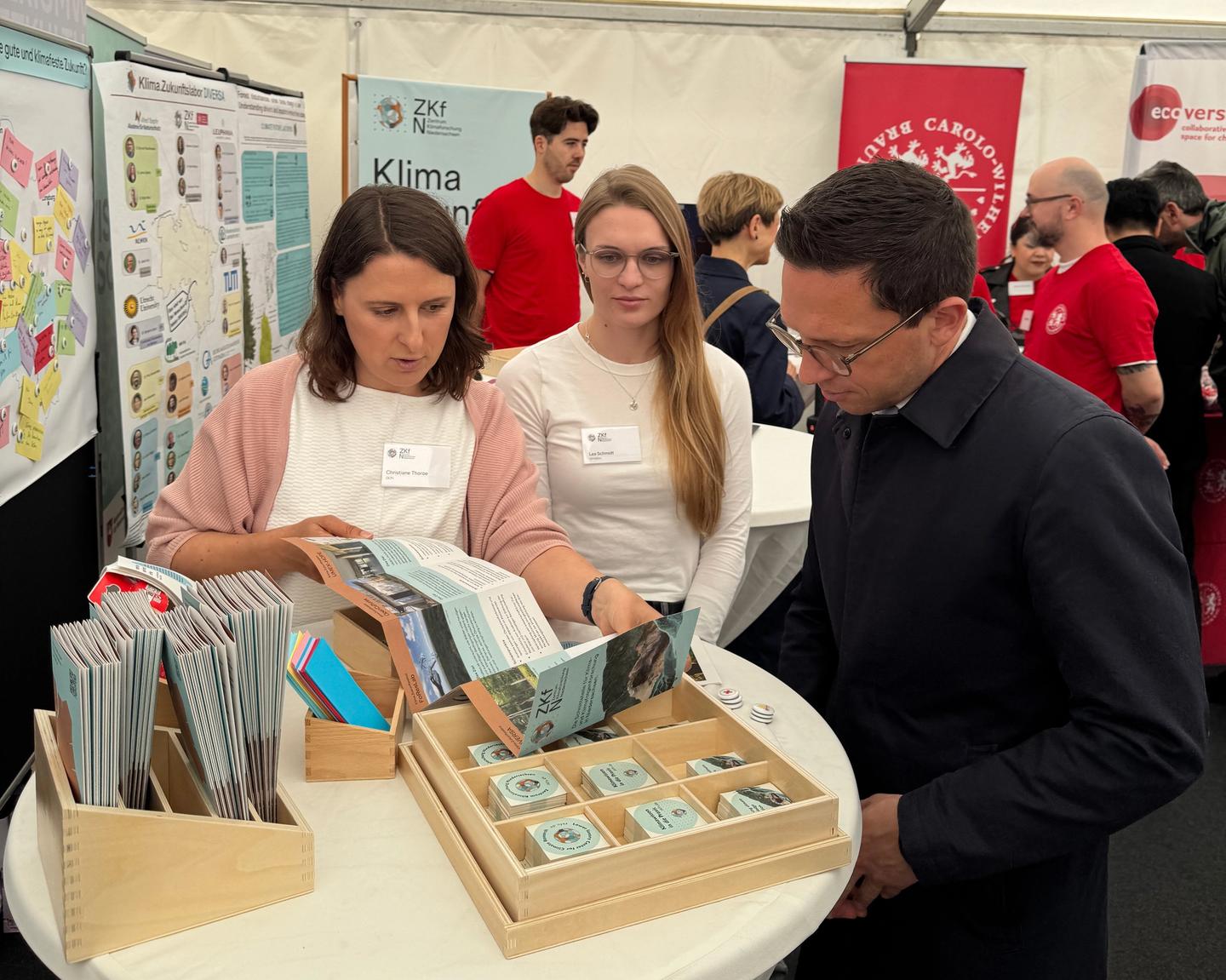
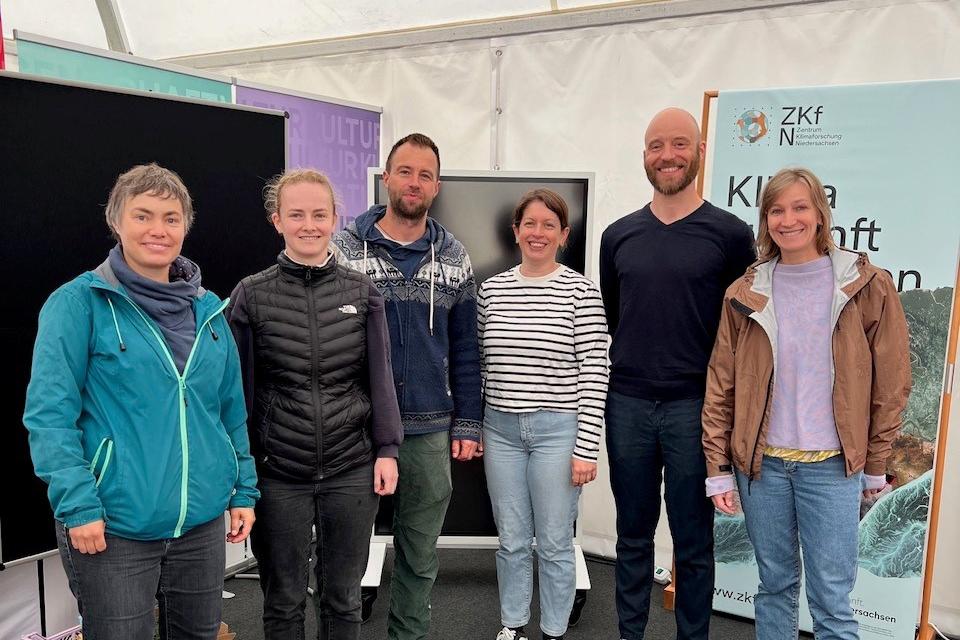
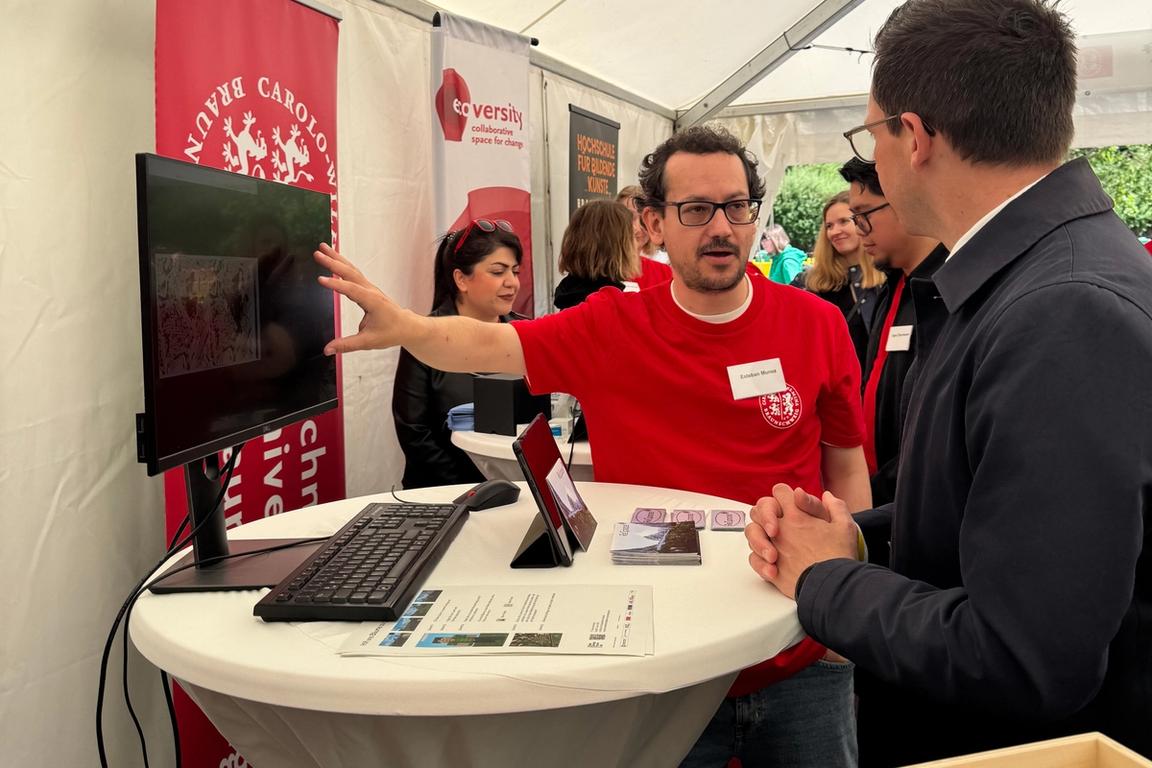
From June 12 to 14, 2026, the Lower Saxony Climate Research Center, together with its Climate Future Labs, participated in Lower Saxony Day in Braunschweig. At the joint booth of the Lower Saxony Ministry of Science and Culture (MWK), visitors gained insights into current research on climate protection and climate adaptation in Lower Saxony.
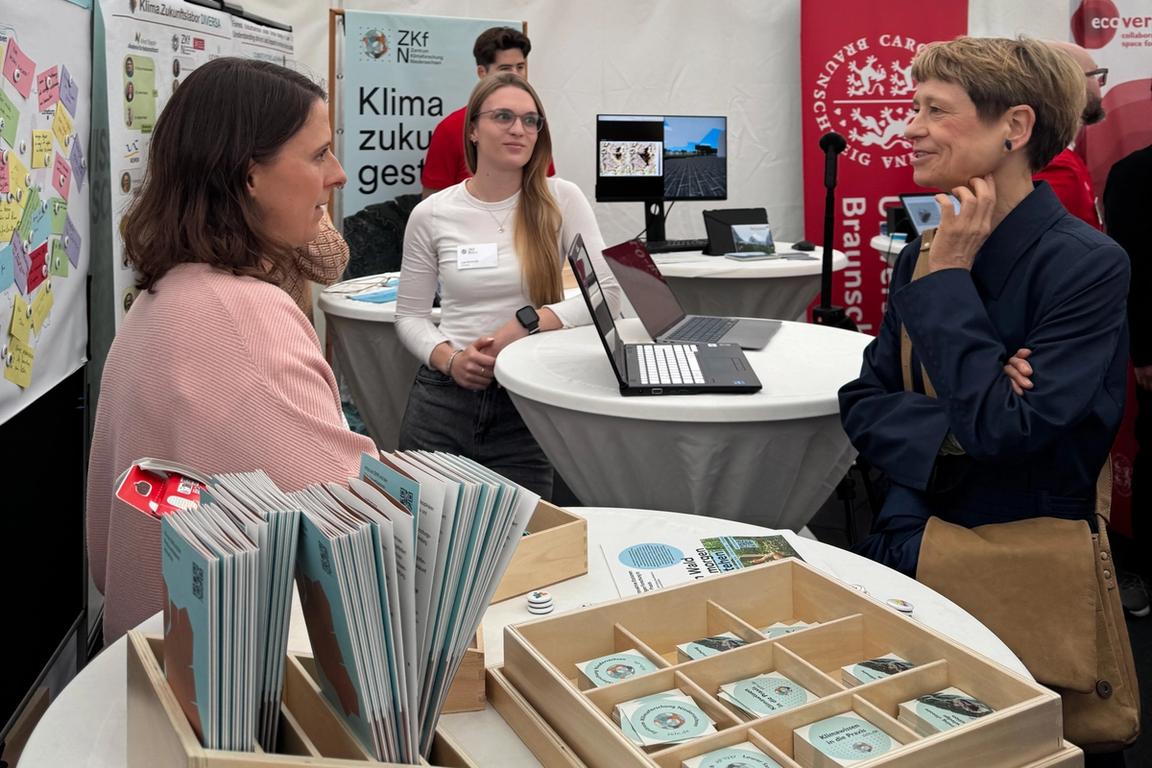
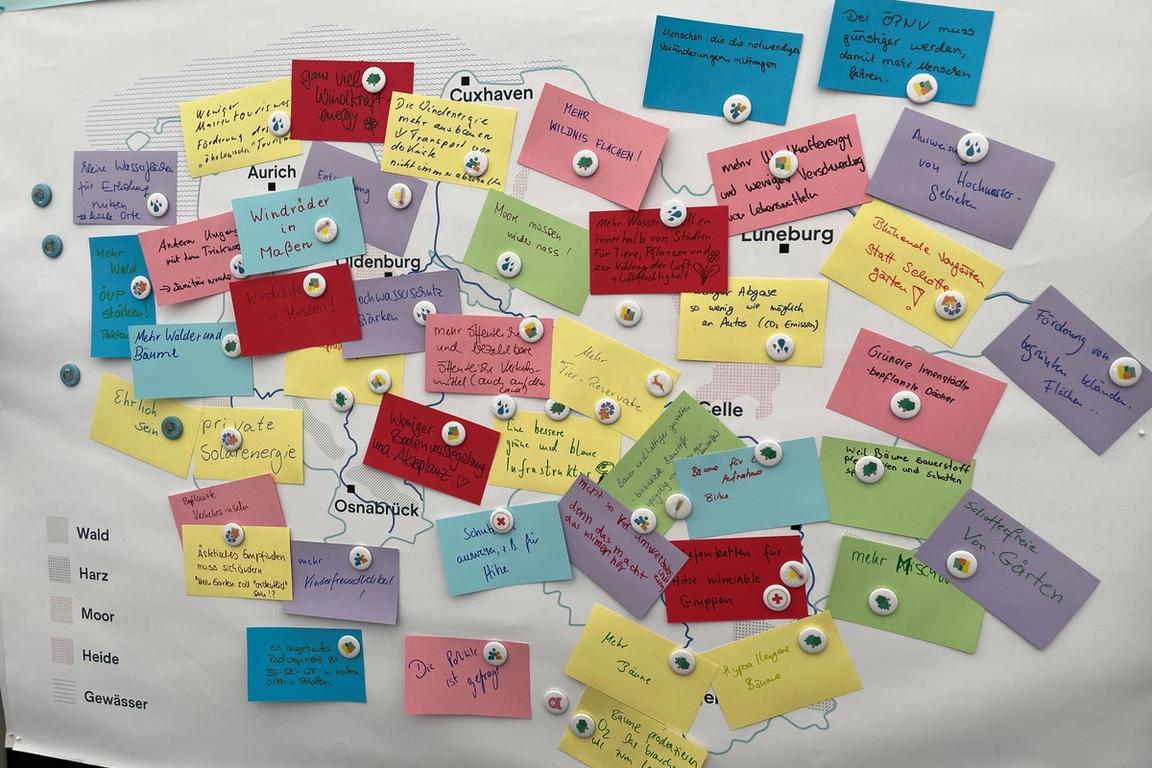
Those who stopped by the booth could also get involved themselves. On a large map of Lower Saxony, visitors pinned their wishes and ideas for a safe and climate-resilient Lower Saxony. This highlighted the diverse challenges that concern people in Lower Saxony. Information cards on topics such as forests, agriculture, biodiversity, cities, water bodies, and heat waves sparked further discussions about the already noticeable effects of climate change. The event was complemented by a climate quiz that conveyed knowledge about climate and environmental issues in a fun and engaging way.
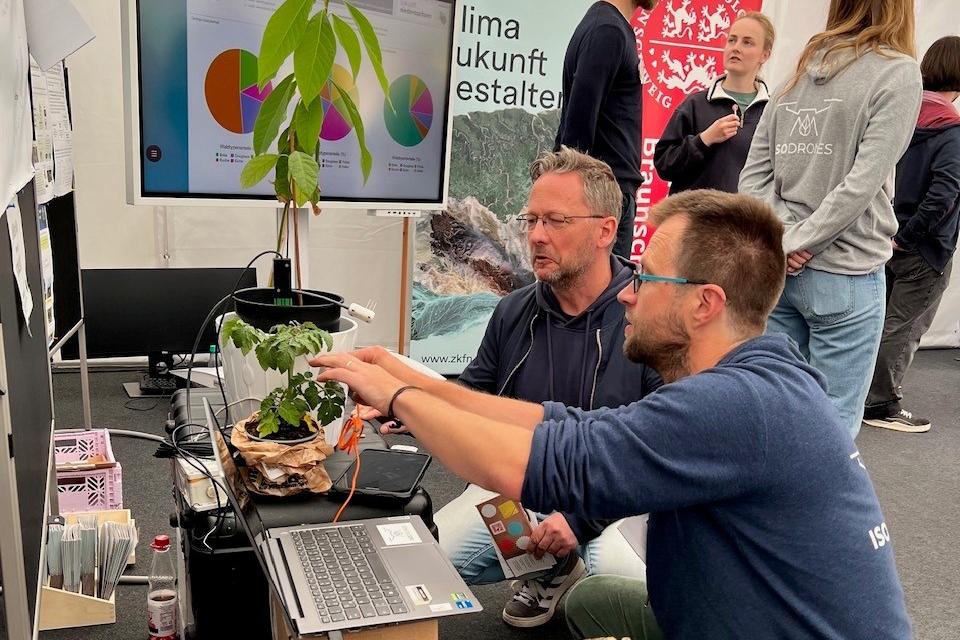
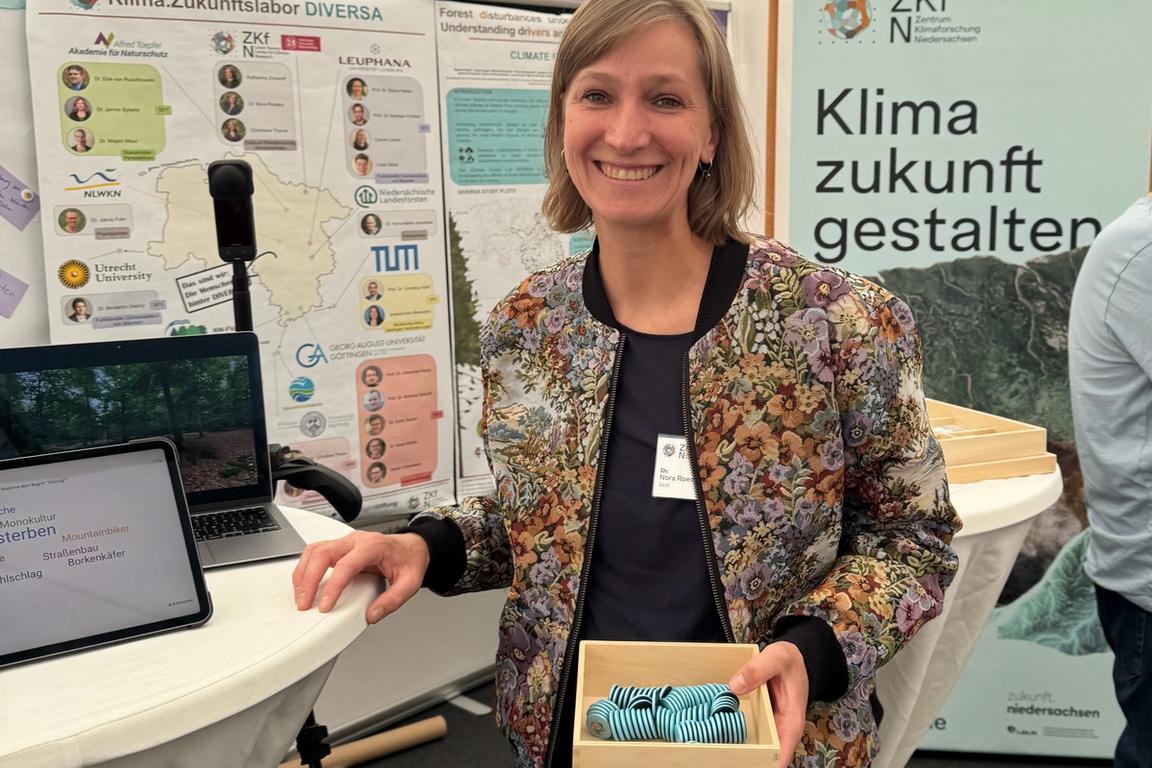
The Climate Future Labs also brought their research to life in various ways. At FoResLab, visitors could explore the functions forests serve today and in the future, how leaf temperatures are measured using drones, and what information tree cores—in this case, “Bertram Baumbaby”—provide about forest development.
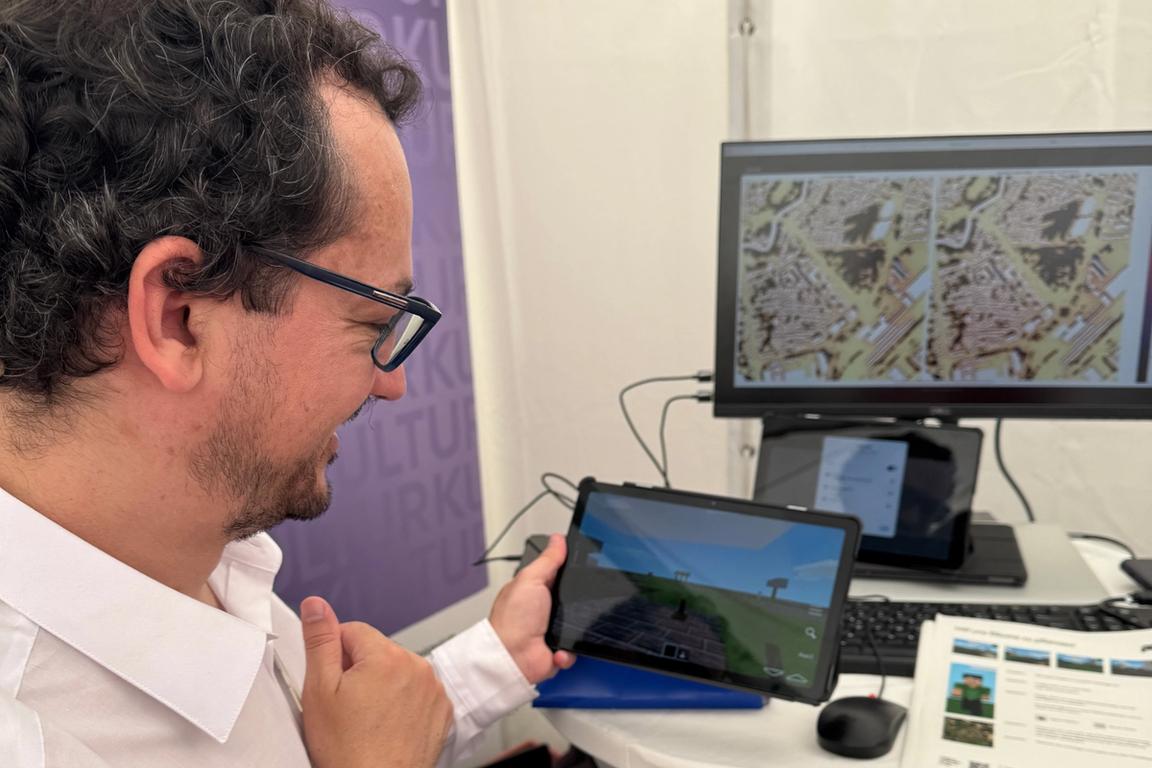
The Urban Climate Future Lab (UCFL) invited visitors to test adaptation measures for improving the urban climate in a Minecraft-like environment based on the Luanti platform: Using tablets, visitors designed virtual urban spaces, planted trees, and could immediately see the effects of their decisions.
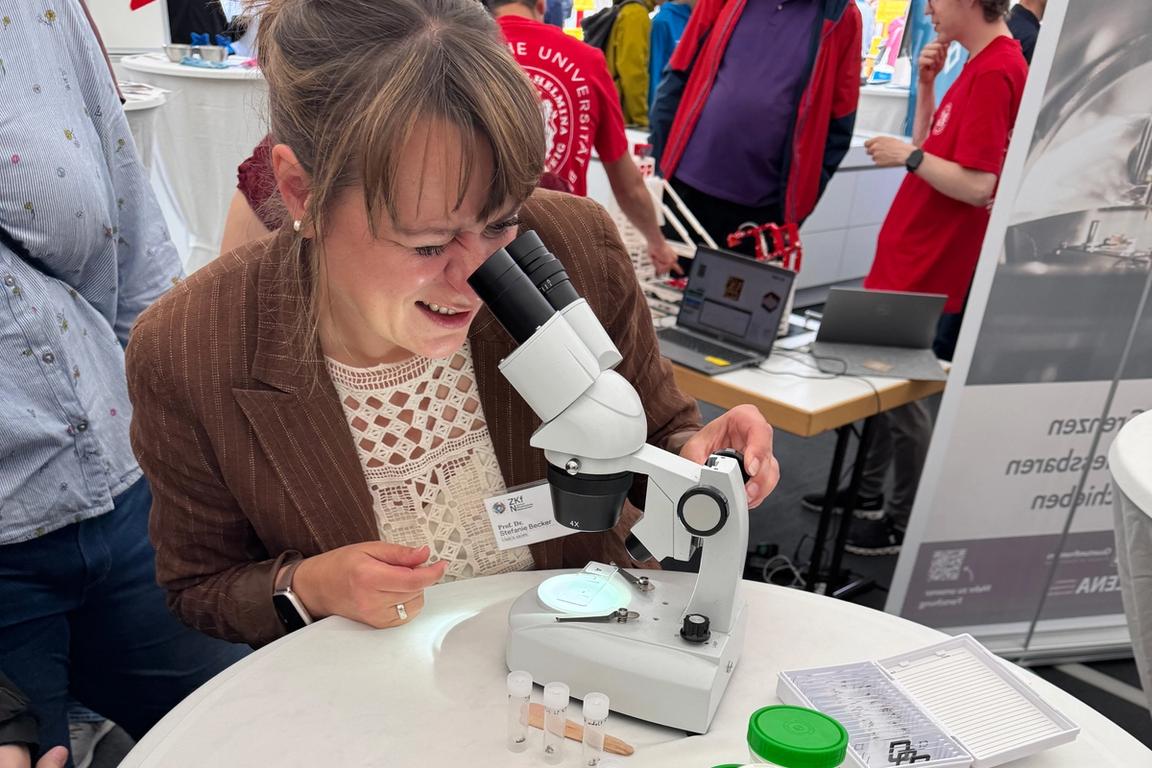
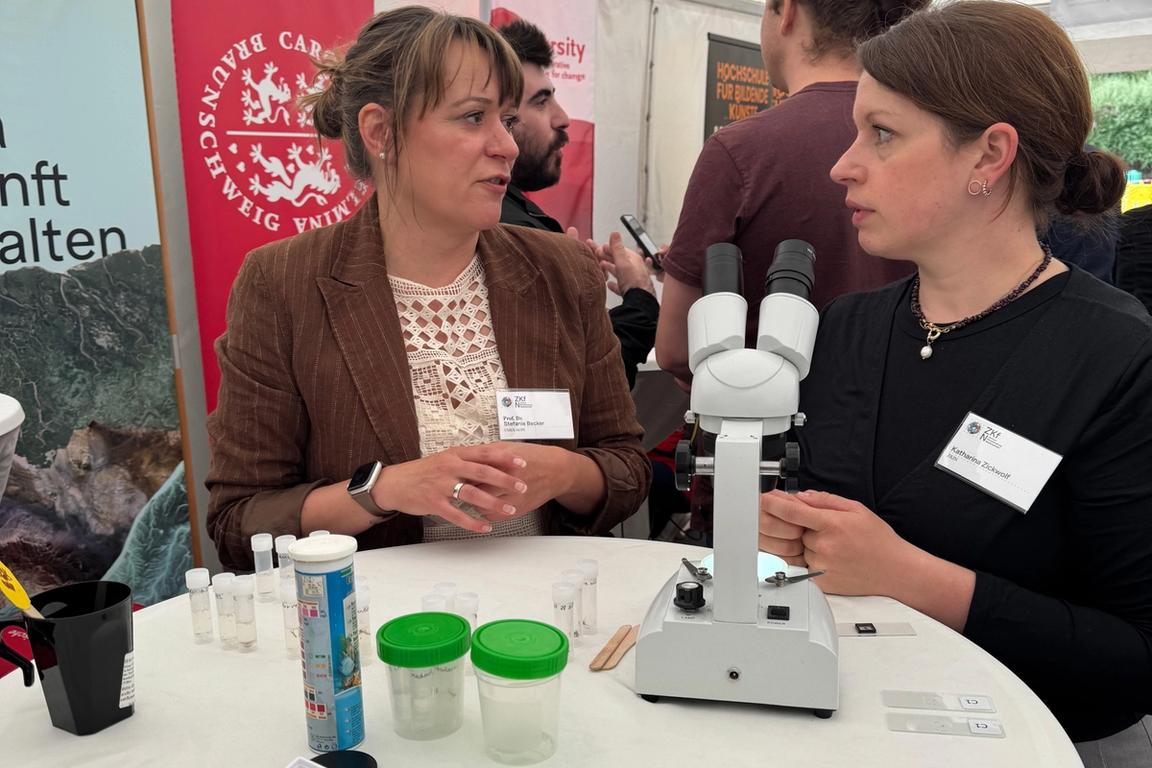
At UMEX-HOPE, visitors could examine various mosquito specimens in detail under a microscope. This allowed them to identify invasive species such as the tiger mosquito themselves and learn about the role these species play in the context of climate change.
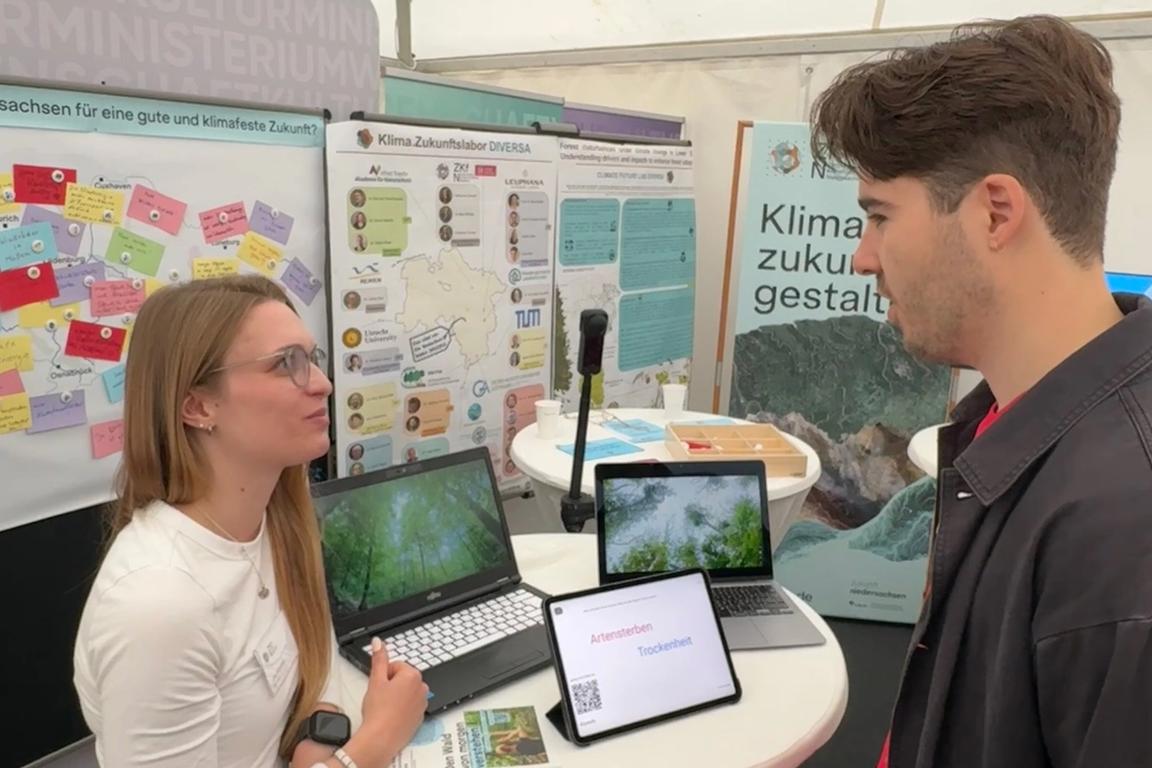
At the DIVERSA booth, visitors were invited to share their own perspectives. They could contribute their own associations with terms such as biodiversity and climate change, which were then used to create a word cloud on the spot. The exhibit was complemented by 360° images of various forest conditions and audio recordings of bird calls, which offered different perspectives on climate change-related shifts in the forest.
The numerous conversations at the booth demonstrated just how great the interest in climate research and climate adaptation is. Particularly valuable were the many perspectives, experiences, and suggestions that visitors left on the map of Lower Saxony and shared during their discussions with the researchers.
The ZKfN would like to thank all visitors for their interest, the engaging conversations, and the ideas they shared. Special thanks go to the members of the Klima.Zukunftslabors for organizing the program, as well as to the Lower Saxony Ministry of Science and Culture for the invitation to the joint booth and the excellent collaboration.
Highlights from Lower Saxony Day










More Posts
All
Climate Research Through Dialogue: “Climate Future Lower Saxony” Symposium 2026
First results are becoming visible – and with them, the question of how they can unfold their impact together with practice.
2 min. Reading time
Climate-Resilient Agricultural Landscapes in Lower Saxony
The sixth Climate Future Lab, AgRe-Lab, combines biodiversity and climate research with regional practice
2 min. Reading time

OpenPlanning Zine 03 "Somethings Cooking"
The zine shows how cooking together and co-creative urban design are sparking new ideas for a mobile climate garden in Braunschweig.
2 min. Reading time