
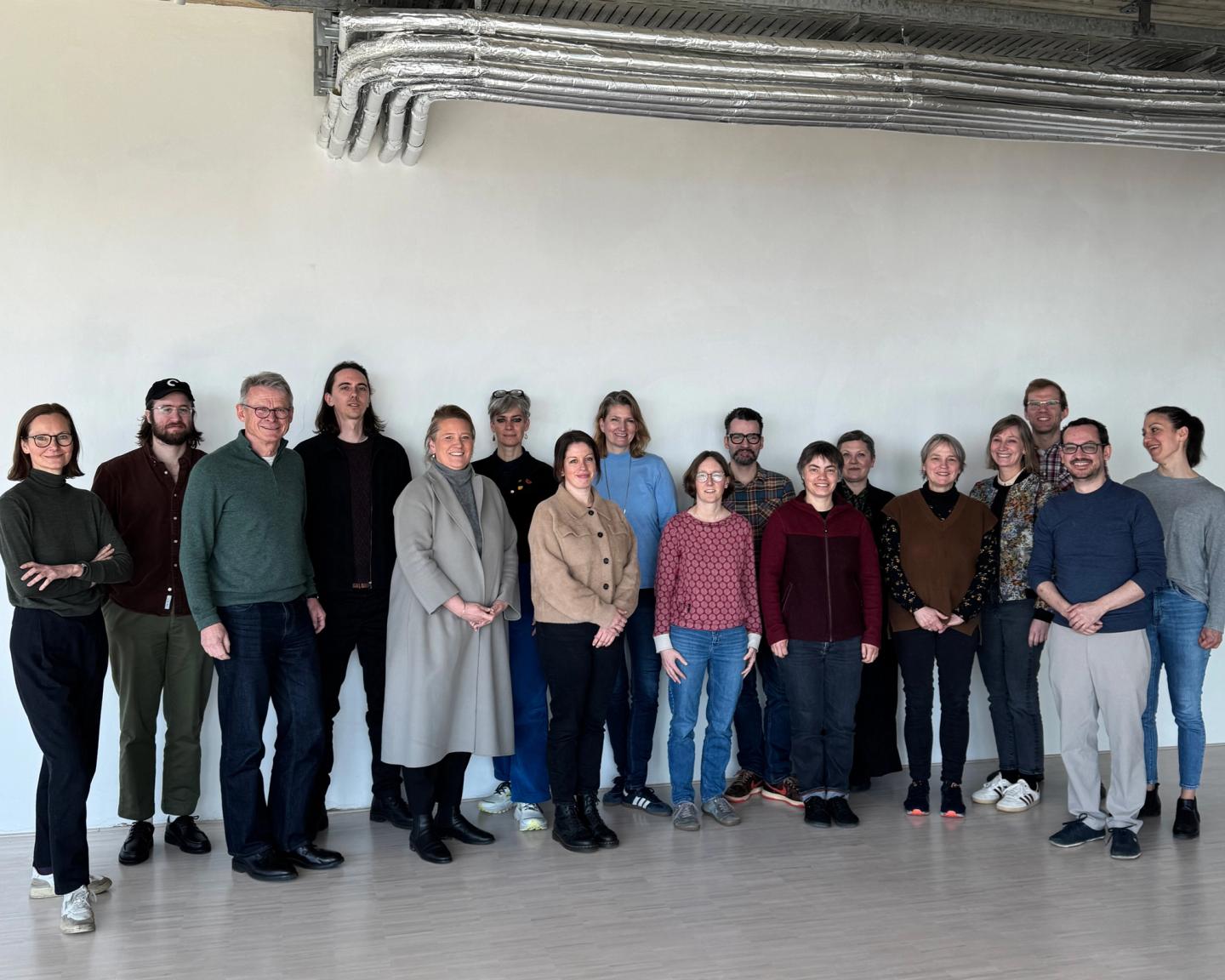
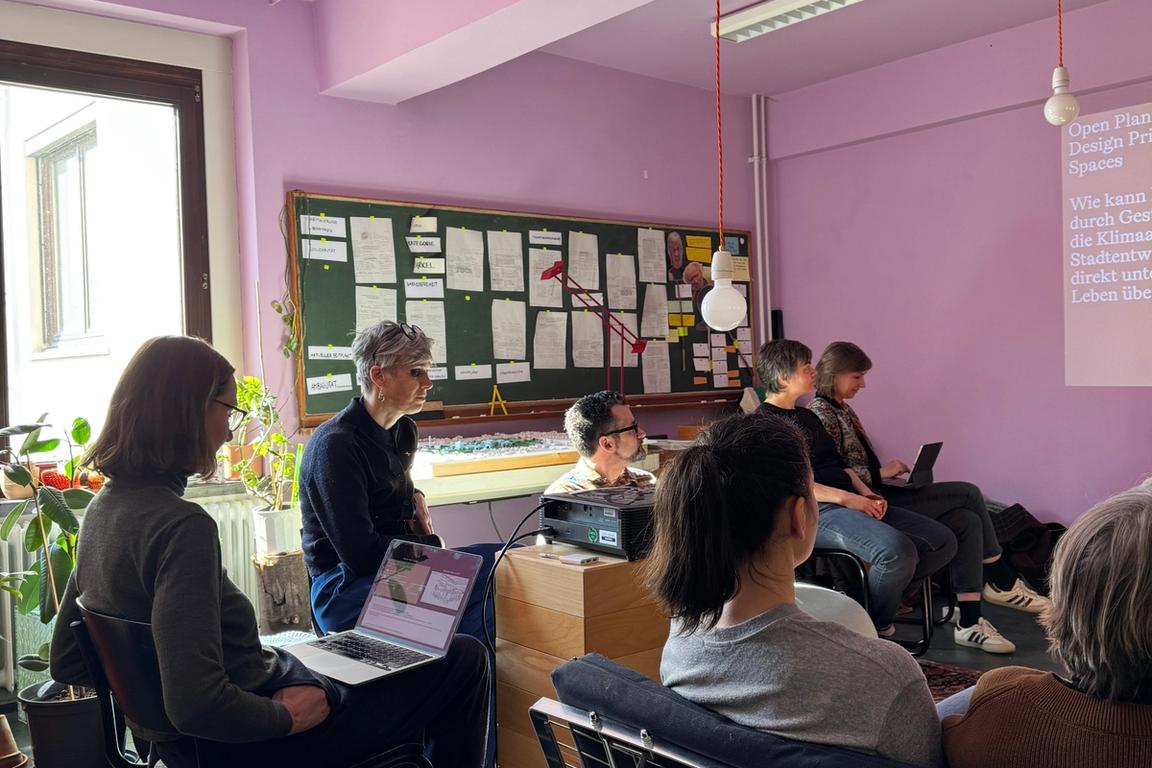
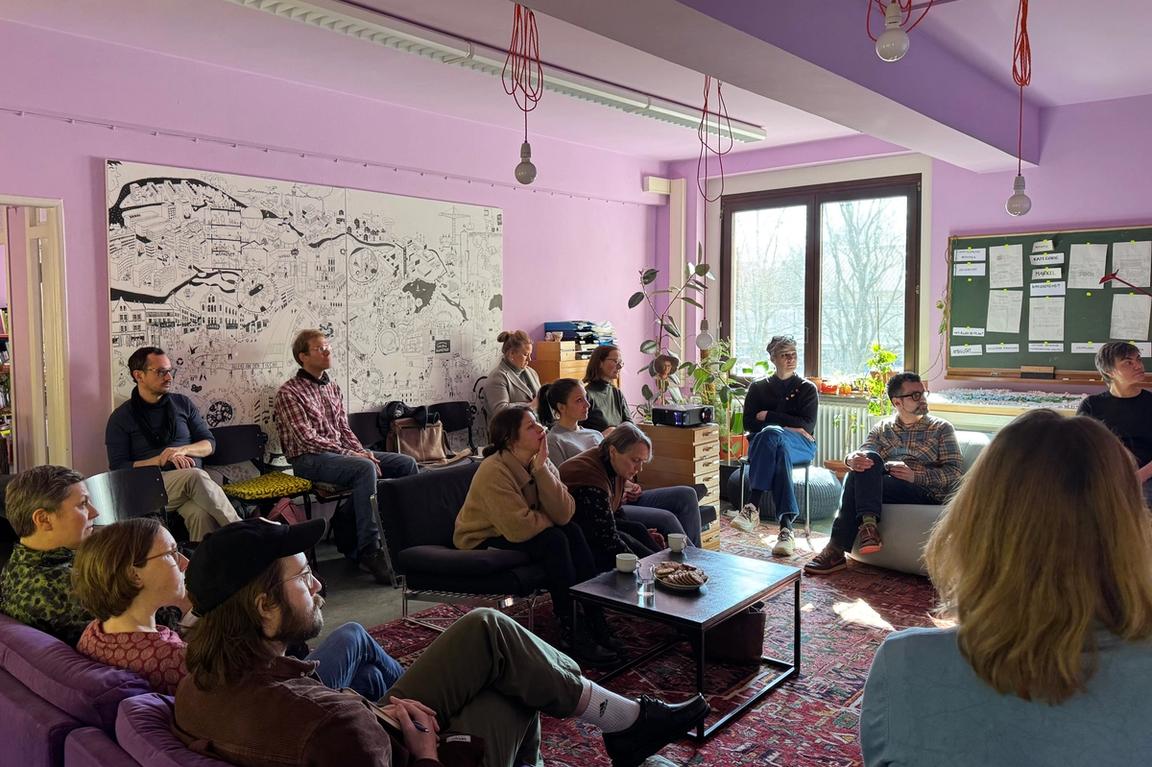
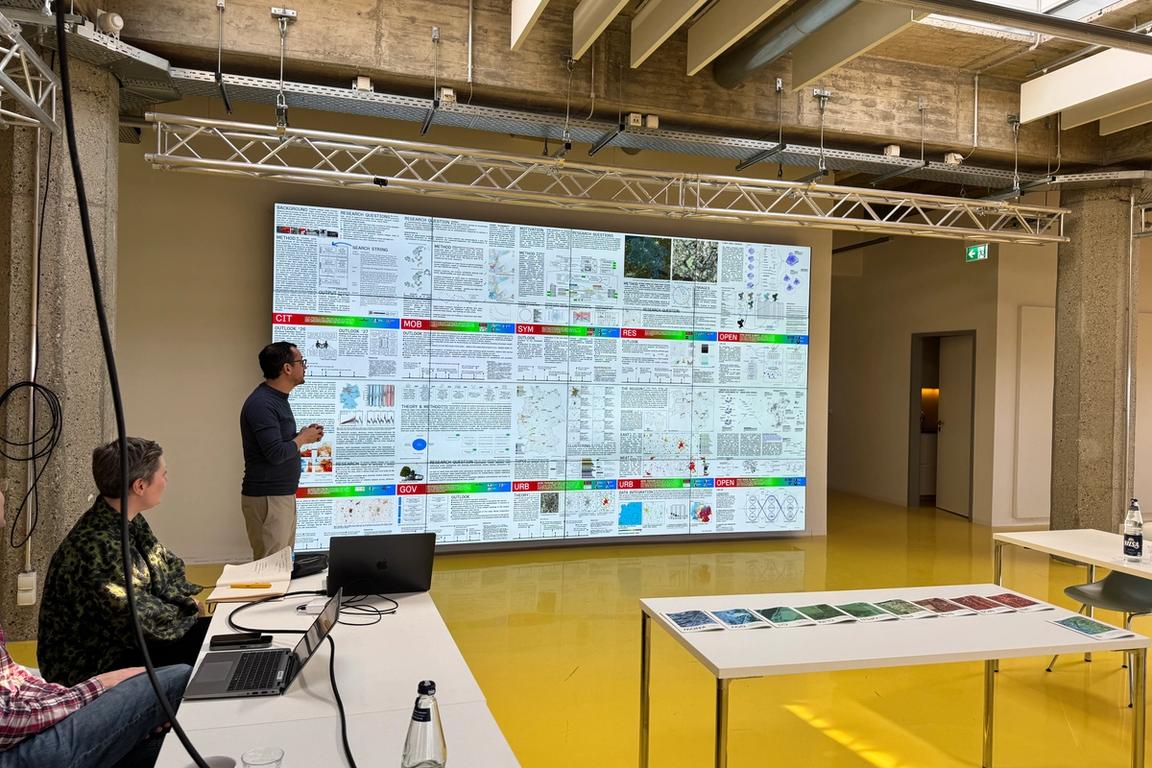
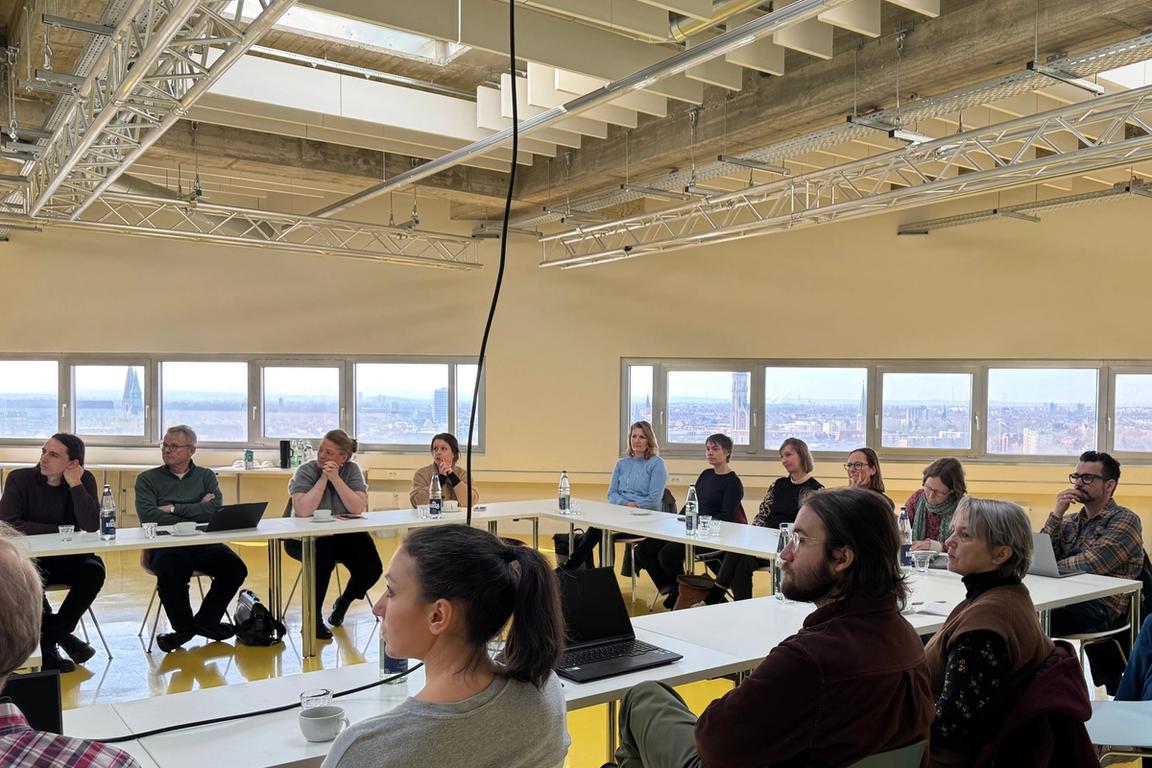
In mid-March, the coordinating group for the Climate Future Labs met in Braunschweig. The event was hosted by Open Cultures and the Urban Climate Future Lab (UCFL), represented by their spokespersons, Prof. Dr. Tatjana Schneider and Prof. Dr. Vanessa Carlow. The program took participants to the two closely neighboring locations as well as to a joint lunch at the institute of Prof. Dr. Elisabeth Endres, who is involved in both labs. The physical proximity of the facilities also reflected the thematic compatibility of the topics: Both labs address the question of how cities can be designed to be sustainable in the face of climate change.
The meeting focused on an exchange regarding common themes and intersections among all five Klima.Zukunftslabors currently in operation. It became clear that similar climate data and models play a role in the labs—and that their use could be further developed more collaboratively in the future. Discussions therefore centered on what a structured approach to these foundational elements might look like—with the goal of better leveraging synergies and avoiding parallel developments.
The challenges of transdisciplinary research were also a central theme. Collaboration between academia, government, and the urban community poses similar questions for all the labs: How can different perspectives be meaningfully brought together? And what formats help ensure that these collaborations remain sustainable in the long term?
Using the city labs as an example, discussions also focused on the design and use of spaces. The focus was on how spaces can be developed in such a way that they are actually embraced, and how this process can be shaped in collaboration with the administration and urban society. At the same time, the long-term perspective was addressed: How can we determine whether and how such places are being used? And how can monitoring be successfully maintained beyond the duration of the projects?
Further overlaps in content emerged in the area of microclimate. Here, there was a clear desire for closer collaboration in order to identify cross-cutting connections at an early stage and address them jointly. Discussions also focused on how specific interfaces between the labs could be designed to facilitate exchange and build on existing research.
The participants posed a key question to Tabea Golgath from the Lower Saxony Ministry of Science and Culture: How can the results developed in the Climate Future Labs be more effectively applied in practical contexts and incorporated into (political) decisions? It became clear that this requires not only suitable transfer formats but also early points of contact with relevant stakeholders.
The meeting, which was initiated by the ZKfN, highlighted how closely many topics are already interconnected across the labs and how important it is to have formats in which these connections can be identified, contextualized, and further developed.
Special thanks go to the host labs for their organization, as well as for the open insights and on-site exchange.




More Posts
All
Forest disturbances and climate shape the diversity of butterflies and moths
First scientific DIVERSA publication
2 min. Reading time
UMEX-HOPE launches with a newsletter and a LinkedIn page
Insights into research, processes and collaboration
1 min. Reading time
Is the black woodpecker endangered in Lower Saxony due to the loss of coniferous wood caused by calamities?
A guest contribution by Dr. Marcus Schmidt and David Singer from the Northwest German Forest Research Institute
3 min. Reading time