OpenCultures publishes annual report for 2025
- November 21, 2025
- 1 min. Reading time

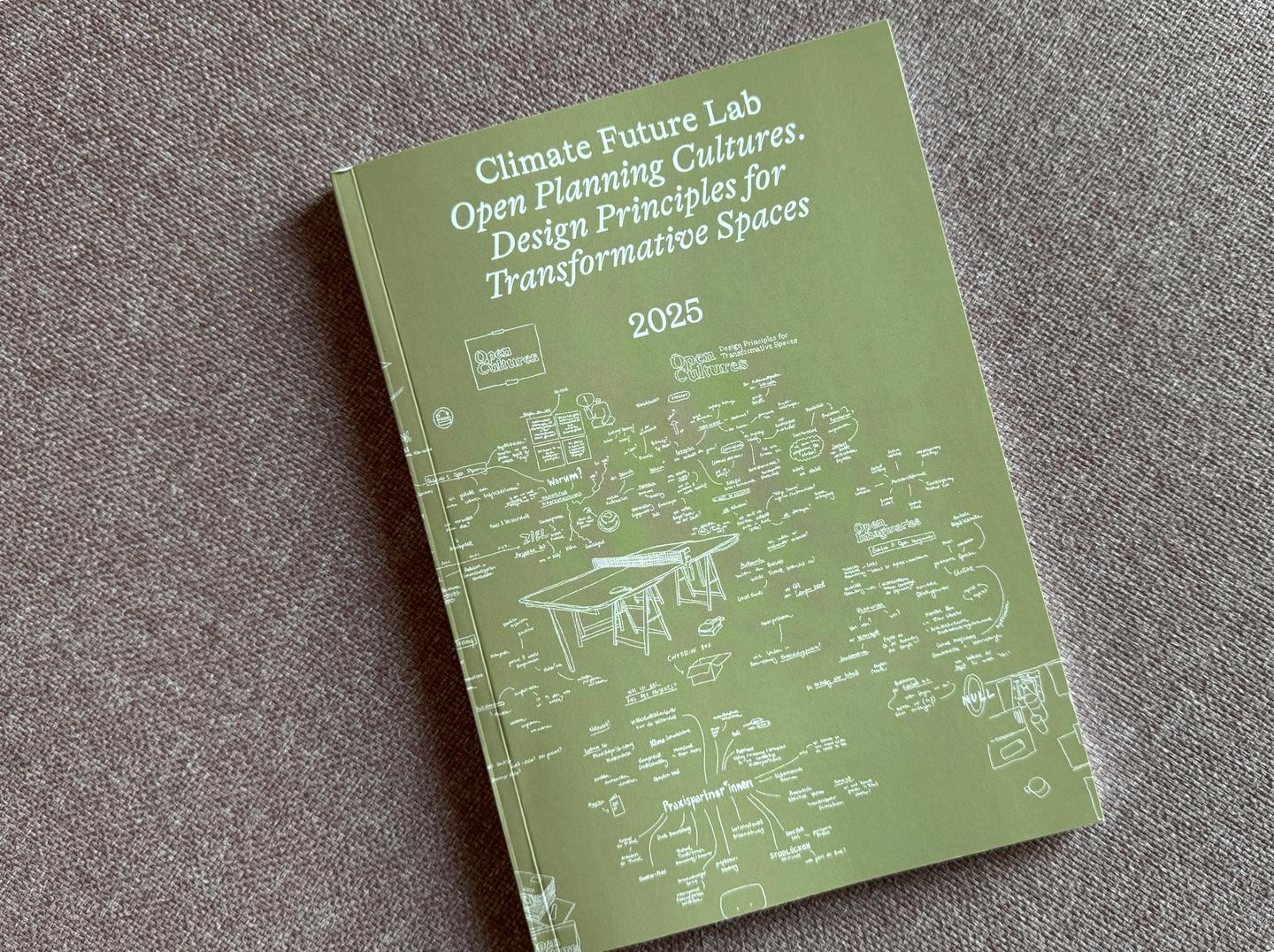
The Climate Future Lab's 2025 annual report, “Open Planning Cultures. Design Principles for Transformative Spaces,” documents the first year of interdisciplinary and transdisciplinary collaboration. The publication provides insight into a research process that deliberately focuses on openness rather than narrowing: on sharing perspectives, making different forms and practices of knowledge visible, and critically reflecting on power relations in knowledge production.
The focus is on the question of how knowledge can be used for climate-friendly urban design without leveling differences. The situatedness and plurality of knowledge are understood not as obstacles, but as prerequisites for joint action. Accordingly, the first year of the project was characterized by diversification, questioning, and testing alternative forms of collaborative research.
The volume depicts this process as a narrative series of images. It tells of atmospheres, methods, and formats, of local encounters, challenges, and emerging spaces of possibility—thus conveying the dynamism and openness of a project that not only researches transformation but also practices it.
More Posts
All
Forest disturbances and climate shape the diversity of butterflies and moths
First scientific DIVERSA publication
2 min. Reading time
UMEX-HOPE launches with a newsletter and a LinkedIn page
Insights into research, processes and collaboration
1 min. Reading time
Coordination Meeting of the Climate Future Labs in Braunschweig
The exchange focuses on the interfaces between the laboratories
3 min. Reading time