Functional drought resistance
DIVERSA SP3 - How do trees respond to increasing severity and frequency of extreme weather events? Understanding this response is central for predicting future changes in forest structure and functions.

The goal is to improve our understanding on how different deciduous tree species respond to heat and drought to enable sustainable forest management in the face of climate change.

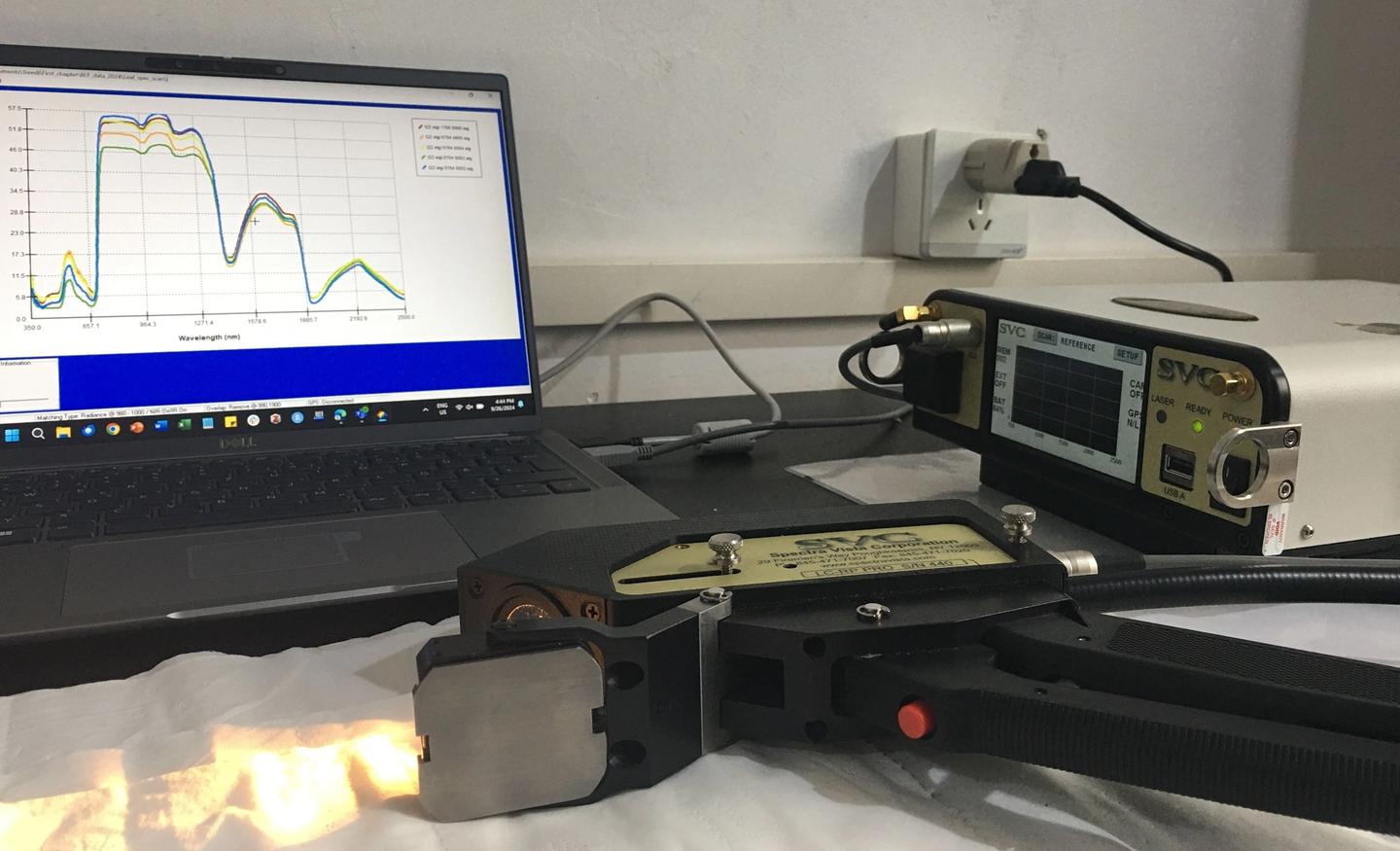
Understanding how trees respond to increasing severity and frequency of extreme weather events such as drought is central for predicting future changes in forest structure and functions. Here, hydraulic traits are assumed to play a key role in a tree’s adaptability to a changing climate. Change impacts may further be modulated by forest management and elevated levels of airborne nitrogen deposition. However, we still have a limited understanding of how the interplay of forest management and nitrogen deposition affects the climate sensitivity of trees. The aim of subproject 3 (SP3) is to better understand heat- and drought-induced responses of multiple deciduous tree species to support forest management under climate change.
For this, SP3 measures hydraulic, morphological and structural tree traits in-situ using various methods such as leaf spectroscopy, embolism vulnerability curves and mobile laser scanning.The impact of heat and drought on tree growth is assessed using tree-ring analysis. An additional greenhouse experiment investigates trait expression in a controlled drought- and nitrogen-enhanced environment.
Contact persons

 Prof. Dr. Andreas FichtnerLeuphana University Lüneburg, Vegetation Ecology and Biodiversity Conservation
 Prof. Dr. Sylvia HaiderLeuphana University Lüneburg, Vegetation Ecology and Biodiversity
Blog
All
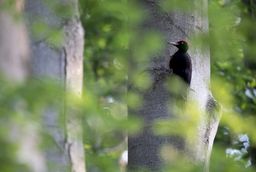
Is the black woodpecker endangered in Lower Saxony due to the loss of coniferous wood caused by calamities?
A guest contribution by Dr. Marcus Schmidt and David Singer from the Northwest German Forest Research Institute
3 min. Reading time
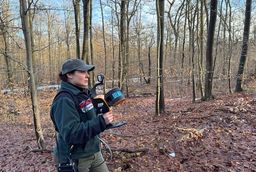
Laser scans in the forest: measuring CO₂ between red beeches and deadwood
What a windless morning, 1,000 square meters of forest, and a laser scanner reveal about carbon storage.
4 min. Reading time
1.5 – one scientist, five questions with Prof. Dr. Andreas Schuldt
Head of the Department of Forest Nature Conservation at Georg August University of Göttingen and sub-project lead at the Climate Future Lab DIVERSA
7 min. Reading time